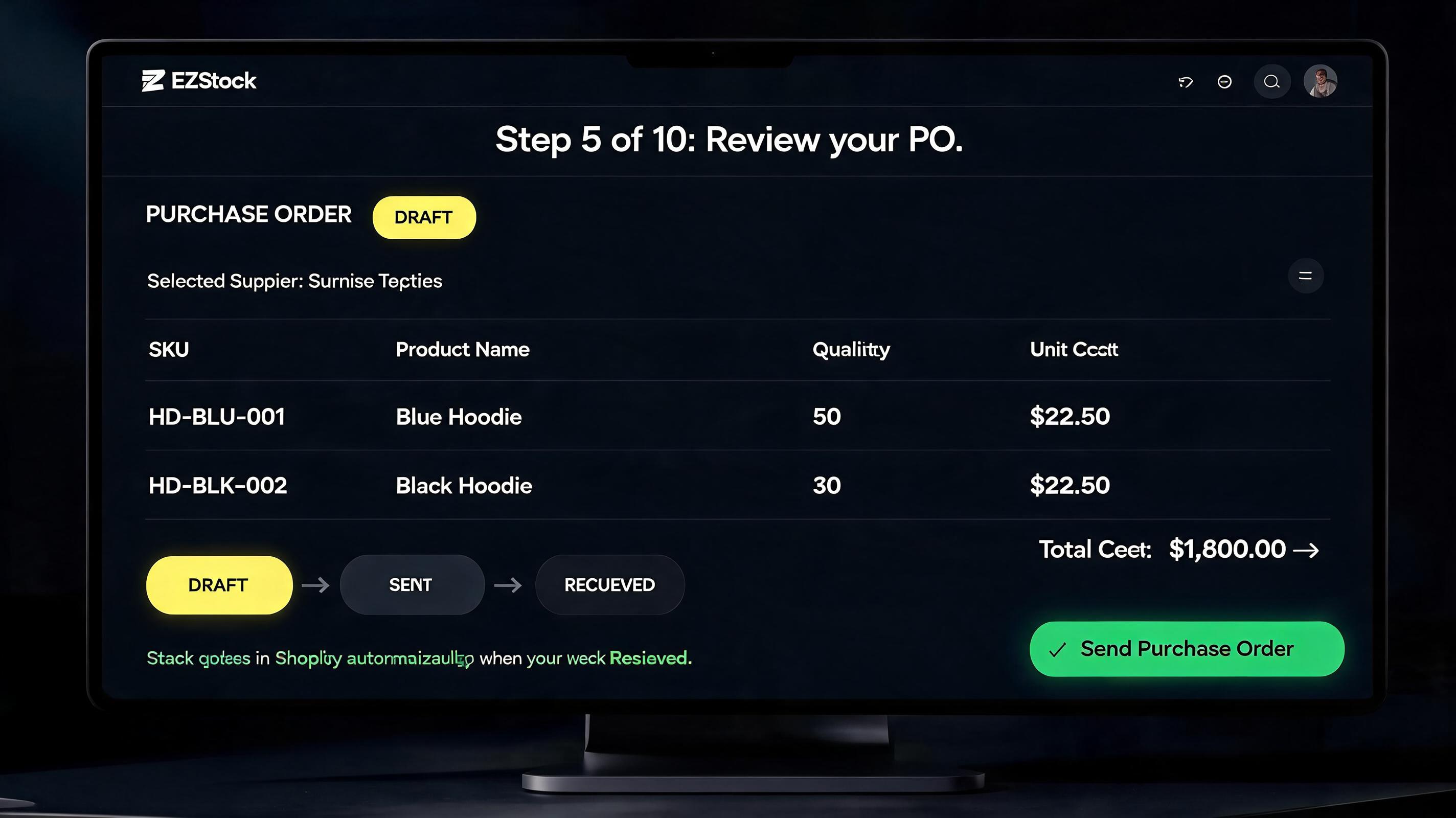
How to Create a Purchase Order in Shopify (Without Spreadsheets)
Shopify has no native PO system. Here's the full step-by-step: add a supplier, create a PO, send it, and receive stock directly into Shopify inventory — in under 10 minutes.
Read guide →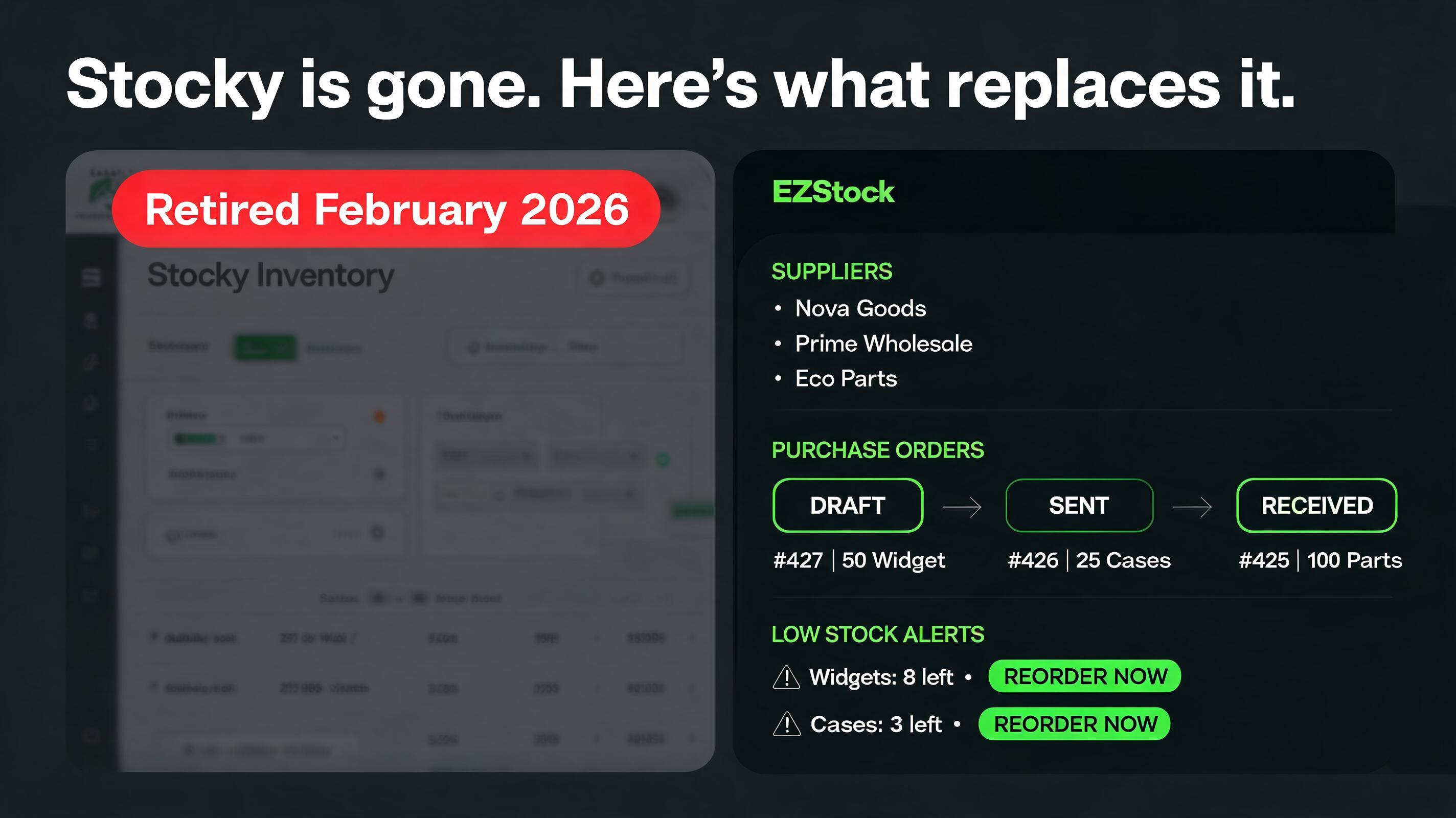
Shopify Stocky Is Gone: The 4 Best Inventory Management Replacements in 2026
Stocky was retired with no direct replacement. Here's what merchants lost, what Shopify built in its place, and which apps actually fill the gap — compared honestly.
Read guide →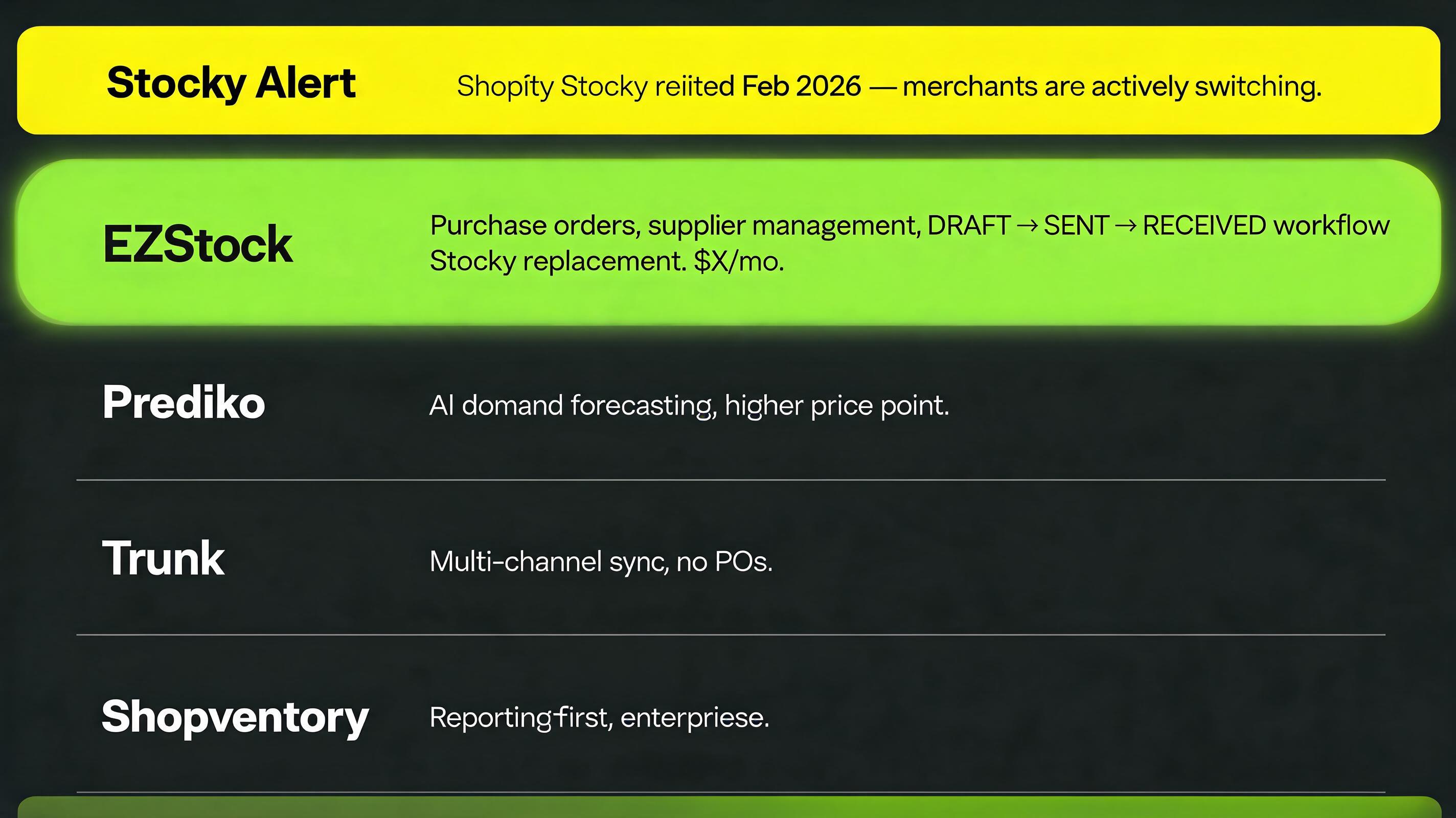
Best Shopify Inventory Management Apps in 2026 (Tested and Compared)
Five apps compared across 12 features — purchase orders, demand forecasting, multi-location, and supplier management. Which one is right for your store size?
Read guide →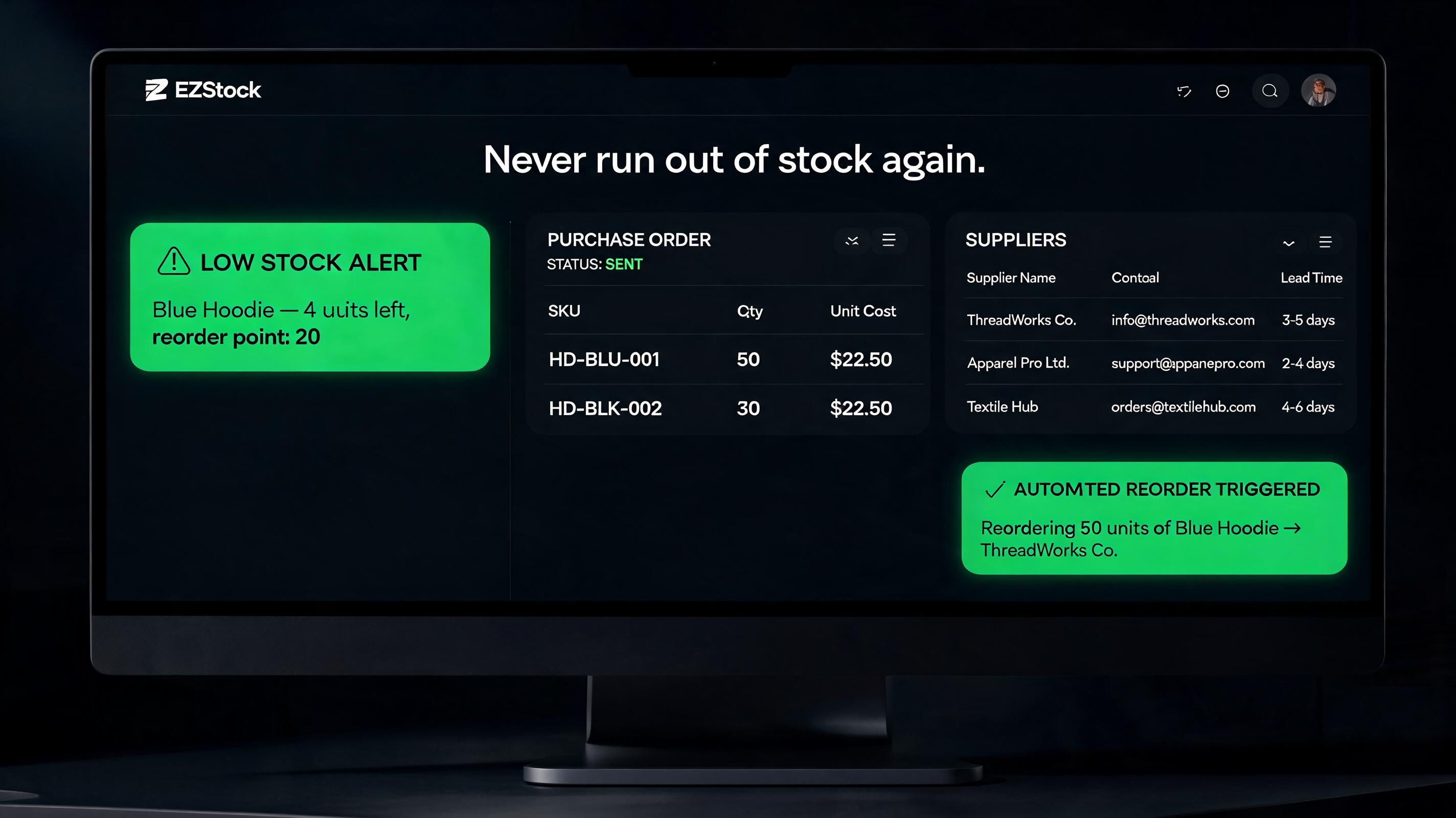
What Is the Best Shopify Inventory Management App? (2026 Answer)
EZStock vs. Prediko vs. Trunk vs. Shopventory — which app wins for POs, which for forecasting, and which for multi-channel sync. Plus: what to use after Stocky was retired.
Read guide →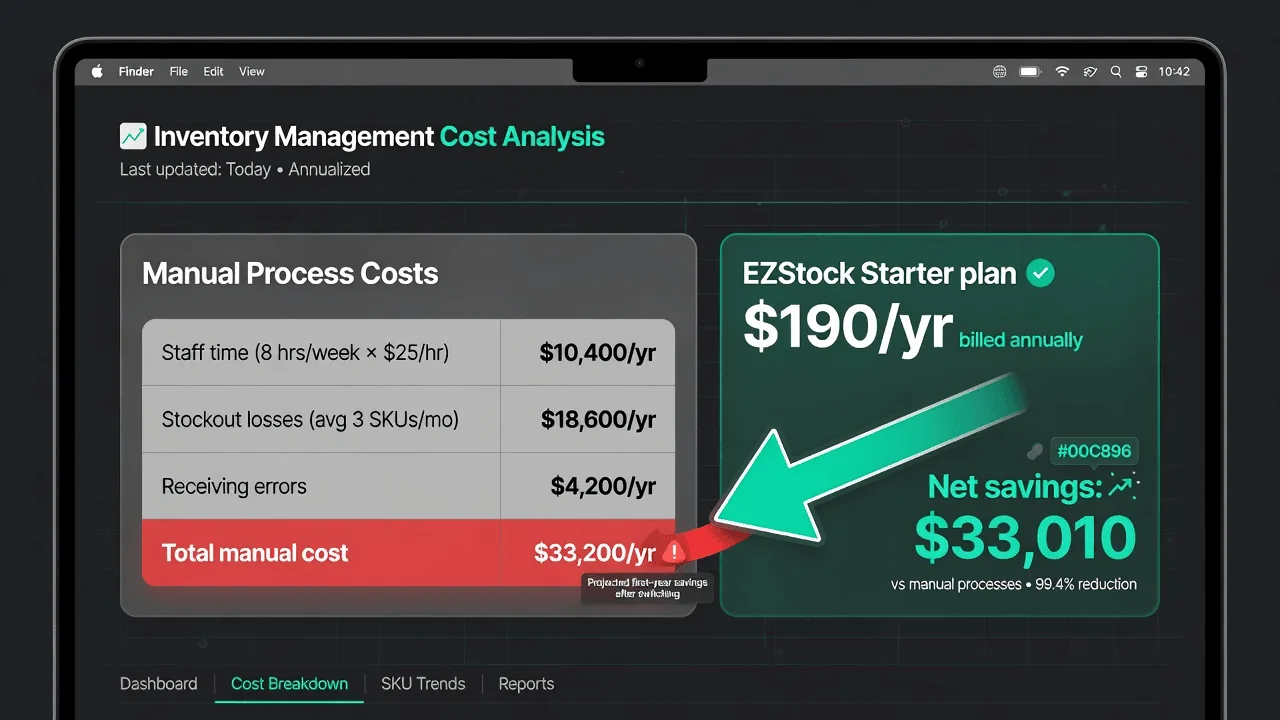
How Much Is Manual Inventory Management Costing Your Shopify Store?
The real cost of spreadsheets: staff time, stockout revenue losses, receiving errors, and the ROI case for switching.
Read guide →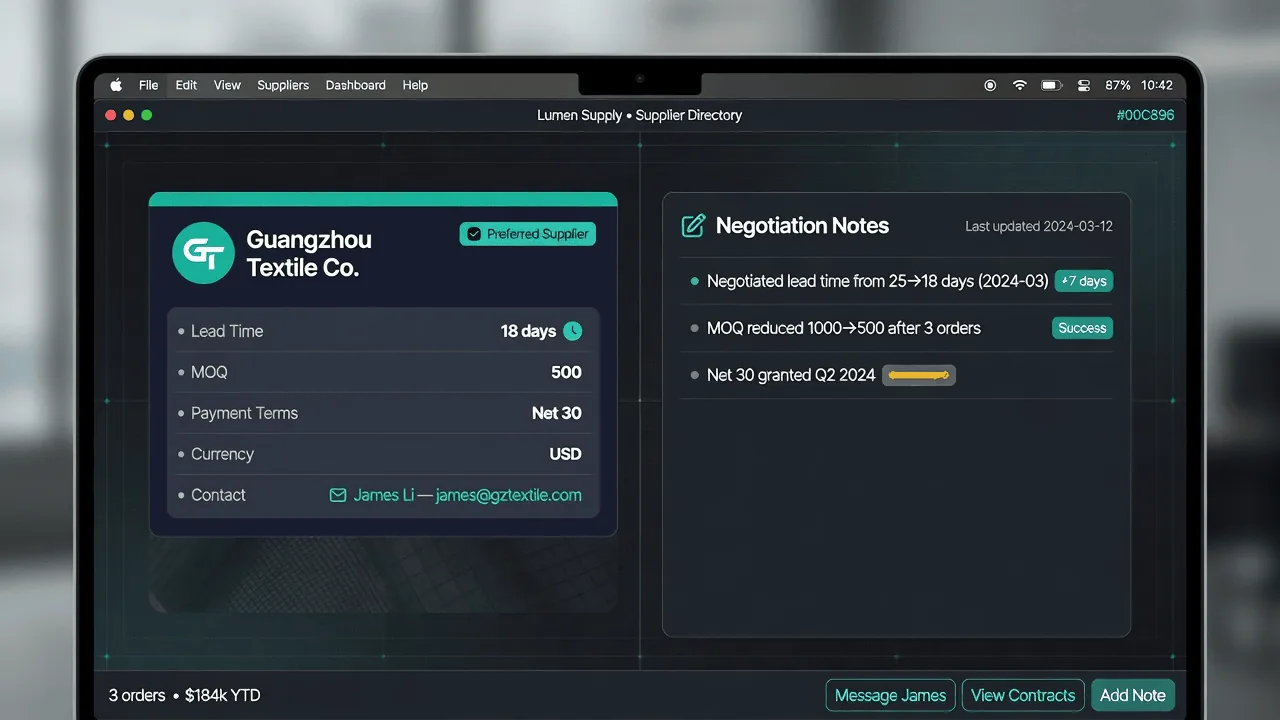
Shopify Supplier Strategy: How to Negotiate Lead Times, MOQs, and Payment Terms
The negotiation tactics, documentation, and supplier relationship strategies that give merchants better terms over time.
Read guide →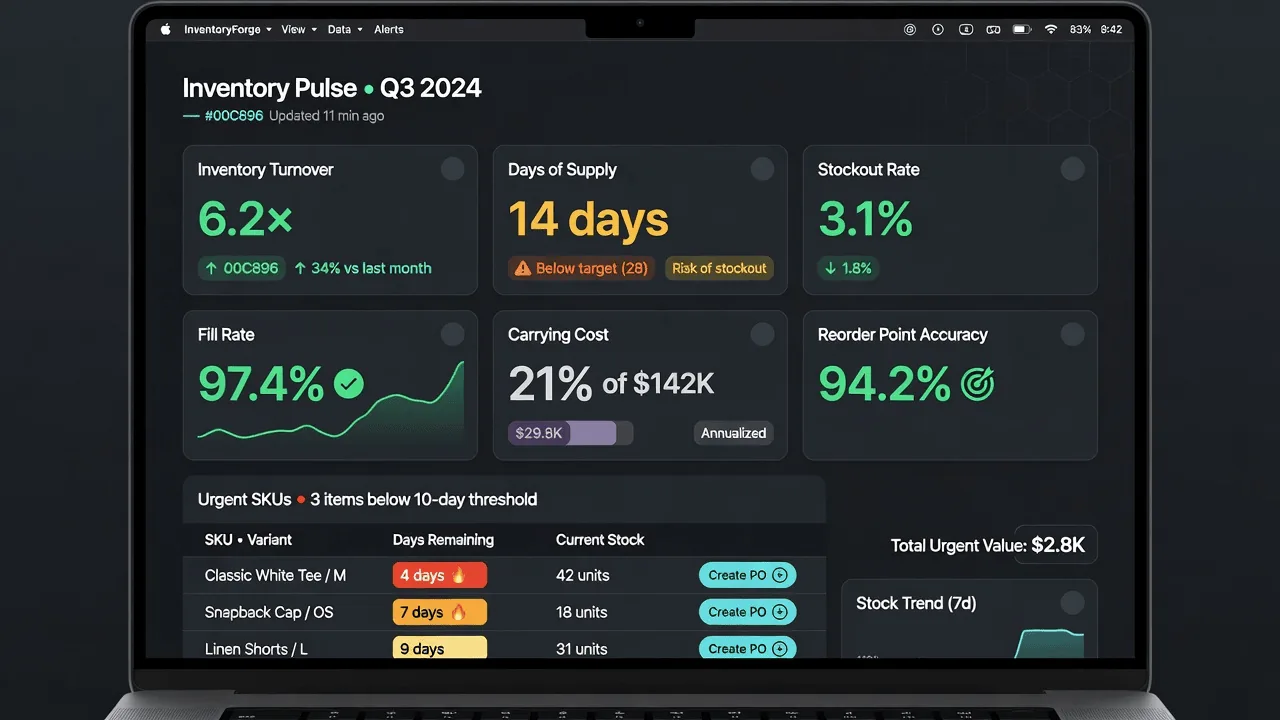
Shopify Inventory KPIs: The 6 Metrics Every Product Business Should Track
Turnover, days of supply, stockout rate, fill rate, carrying cost, and reorder point accuracy — what each measures and how to improve it.
Read guide →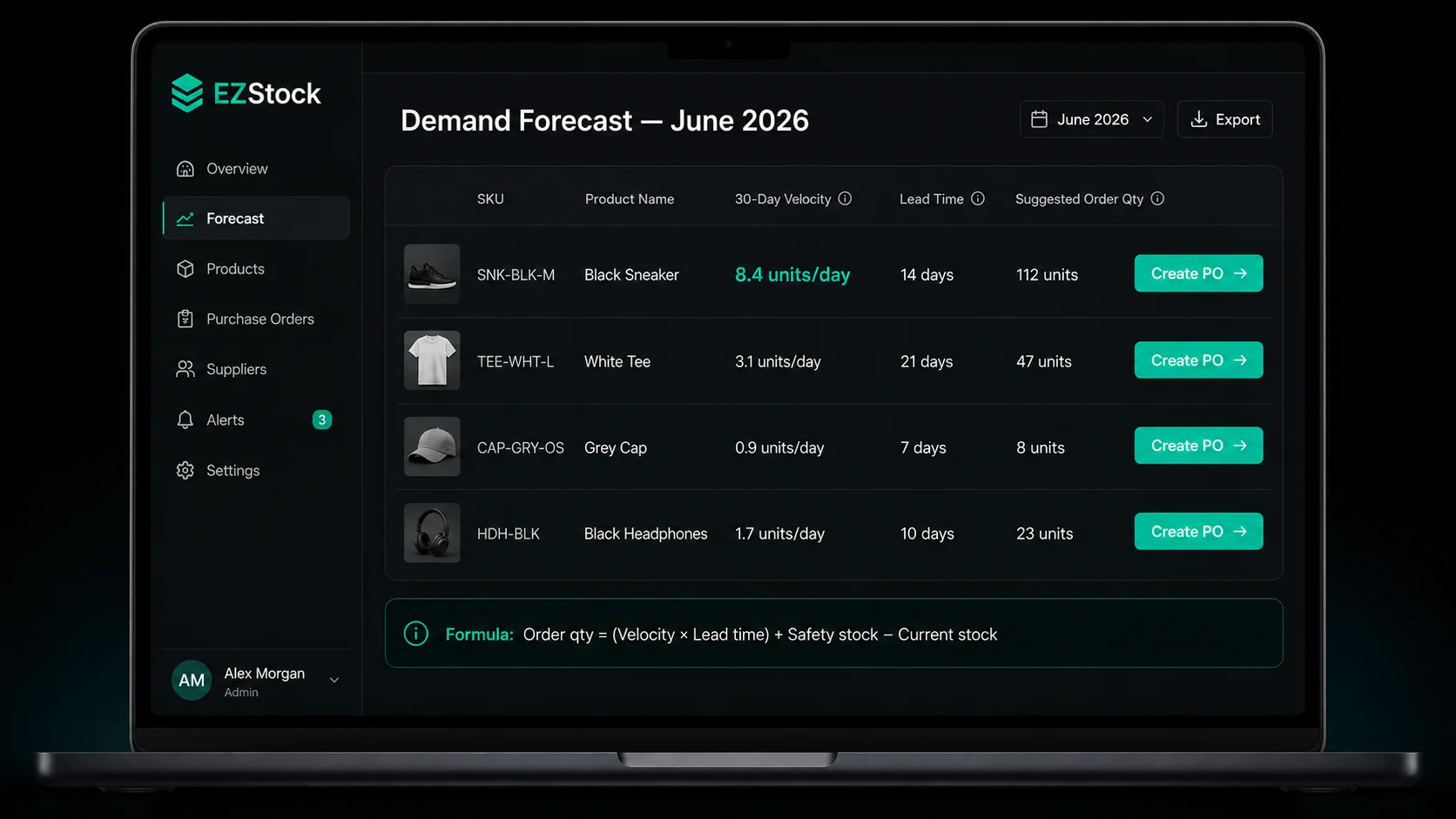
Shopify Demand Forecasting: How to Predict Inventory Needs and Stop Buying Blind
The sales velocity formula, how to translate it into reorder quantities, seasonal adjustments, and how EZStock automates the forecast per SKU.
Read guide →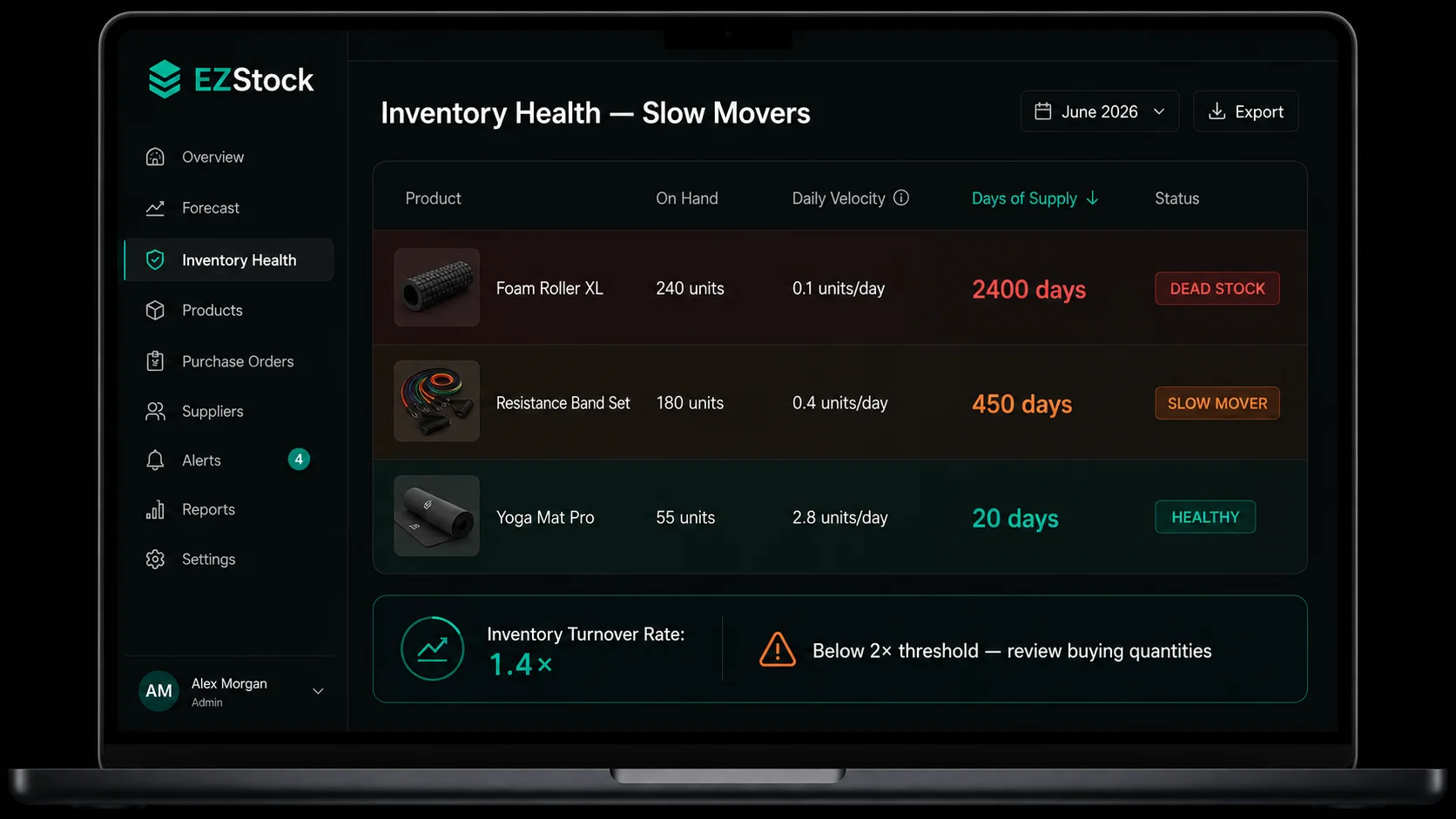
Shopify Dead Stock: How to Identify Slow-Moving Inventory and Free Up Trapped Cash
How to calculate days of supply and inventory turnover rate, benchmarks by category, and the clearance sequence that recovers margin without destroying your brand.
Read guide →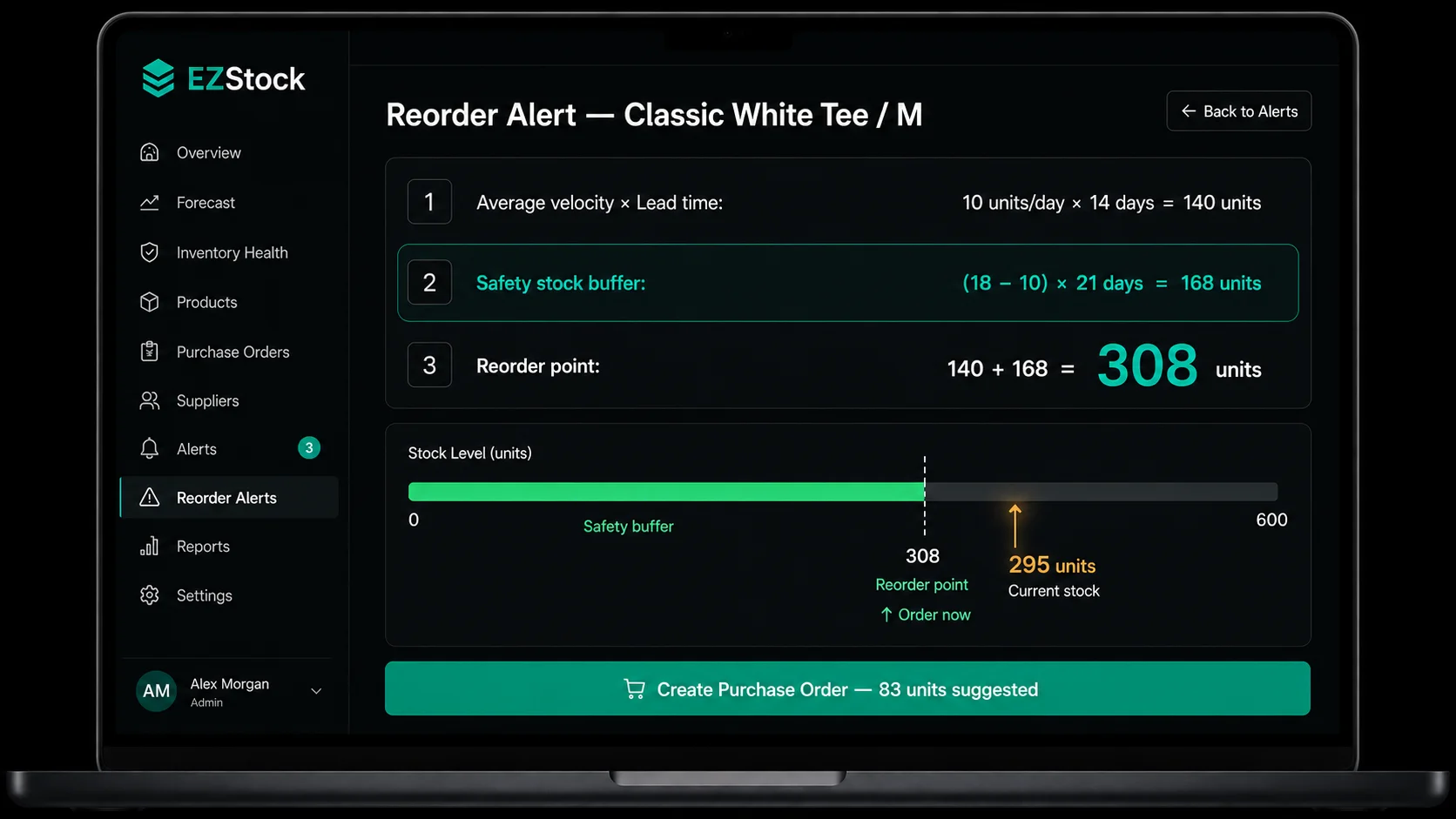
Shopify Safety Stock: How to Calculate the Right Buffer and Never Stock Out
The simplified safety stock formula with worked examples, how to adjust by product type, and how to configure it in EZStock's reorder point system.
Read guide →