What dynamic pricing actually means
Dynamic pricing means adjusting your nightly rate based on demand — charging more when demand is high, less when it's low. Hotels have done this for decades. The airline industry built its entire revenue model around it. Airbnb hosts who do it manually (or with tools) consistently outperform those who don't.
The core insight is that your listing has a different demand curve on different nights. A 3-bedroom near a convention center on the weekend of a major conference is worth dramatically more than the same property on a quiet Tuesday in January. Static pricing leaves most of that value uncaptured.
The four demand drivers to price around
1. Day of week
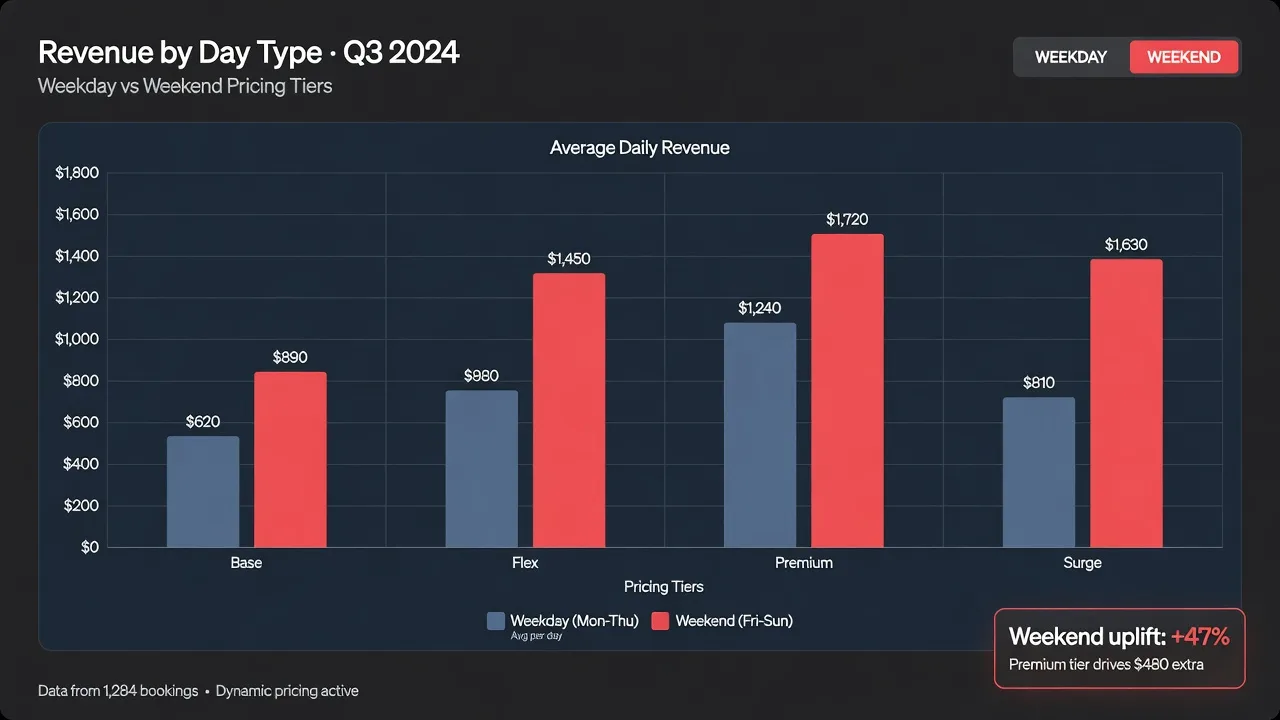
Weekend rates should almost always be higher than weekday rates for leisure-focused markets. Thursday–Sunday is typically peak; Monday–Wednesday is typically slow. A common starting framework is a 25–35% weekend premium over your weekday base rate.
Urban markets and business-travel destinations sometimes have the inverse pattern — midweek business travel can generate stronger demand than leisure weekends. Know which type of market you're in before applying a blanket weekend premium.
2. Seasonality
Every market has a seasonal pattern. Beach markets peak in summer. Ski markets peak in winter. Mountain/fall foliage markets peak in October. Urban markets tend to be more stable year-round with mild peaks around major holidays.
Map your market's seasonal curve and set seasonal pricing bands accordingly. A 3-tier structure — peak, shoulder, off-peak — covers most markets without requiring daily manual adjustments. Peak season rates can often be 40–60% above off-peak for leisure markets with strong seasonality.
3. Local events
Major local events — concerts, festivals, sports championships, graduation weekends, conferences — create temporary demand spikes that can justify rates 2–3x your normal peak pricing. These are the highest-leverage nights in your calendar.
The challenge is knowing about events far enough in advance to capture the early-booking demand. AirPrice's demand calendar surfaces high-demand upcoming weekends so you can identify these windows before they fill up on your calendar at your regular rate.
4. Lead time and last-minute availability
Demand changes as the check-in date approaches. For high-demand periods, maintain or raise your rate as the date gets closer — scarcity increases your leverage. For low-demand periods where you have unbooked dates within 2 weeks, a modest discount (10–15%) to fill gaps often makes sense. An empty night earns nothing; a discounted night still contributes to your revenue.
| Demand Driver | Typical Rate Impact | How to Detect |
|---|---|---|
| Local events (concerts, sports) | +20-40% | Check local event calendars 60-90 days out |
| Holiday weekends | +25-45% | US holidays: Memorial Day, Labor Day, 4th of July |
| School vacation periods | +15-30% | Varies by local school district calendar |
| Low-supply periods | +10-25% | Monitor competing listings going unavailable |
| Peak season (location-specific) | +30-60% | Beach: Jun-Aug; Ski: Dec-Mar; City: year-round |
| Shoulder season | Flat to -10% | Spring/fall for most leisure markets |
| Weekday vs. weekend | +20-35% Fri-Sat | Applies to most markets except business travel |
| Last-minute discount (3-7 days out) | -10-20% | Standard fill-rate strategy |
| New listing boost (first 90 days) | N/A (Airbnb inflates rank) | First-page placement regardless of price |
A practical tiered pricing framework
You don't need algorithmic pricing software to capture most of the dynamic pricing upside. A simple tiered structure covers the majority of scenarios:
Set your weekday base rate
Use AirPrice comp data to anchor your weekday base rate to the market. This is your floor for regular demand periods — the rate you'd charge on a Monday in a normal week.
Add a weekend multiplier
Set Fri–Sat at 1.3–1.4× your weekday base rate. Adjust based on what comps charge on weekends — AirPrice shows weekend rates in the comparable gallery.
Set seasonal rates
Define your peak, shoulder, and off-peak periods. Set peak at 1.4–1.6× base, off-peak at 0.75–0.85× base. Apply these as your default seasonal calendar.
Override for events
Monitor your market for events 60–90 days out. When you spot a high-demand weekend on the AirPrice demand calendar, manually set that weekend to 1.8–2.5× your base rate and block last-minute discounting.
What not to do
Don't discount too early. Lowering your rate 30 days before a holiday weekend signals low demand and can trigger a race to the bottom with other hosts who watch the same comp data. Hold your price; last-minute demand usually fills the calendar.
Don't raise prices indiscriminately. Significant price increases on ordinary weekends without comp data to back them up will hurt your search ranking and booking rate. Every price change should be anchored to market data, not intuition.
Don't rely solely on Smart Pricing. It's a useful floor, not a strategy. Hosts who actively manage pricing around Smart Pricing's baseline consistently outperform those who set it and walk away.