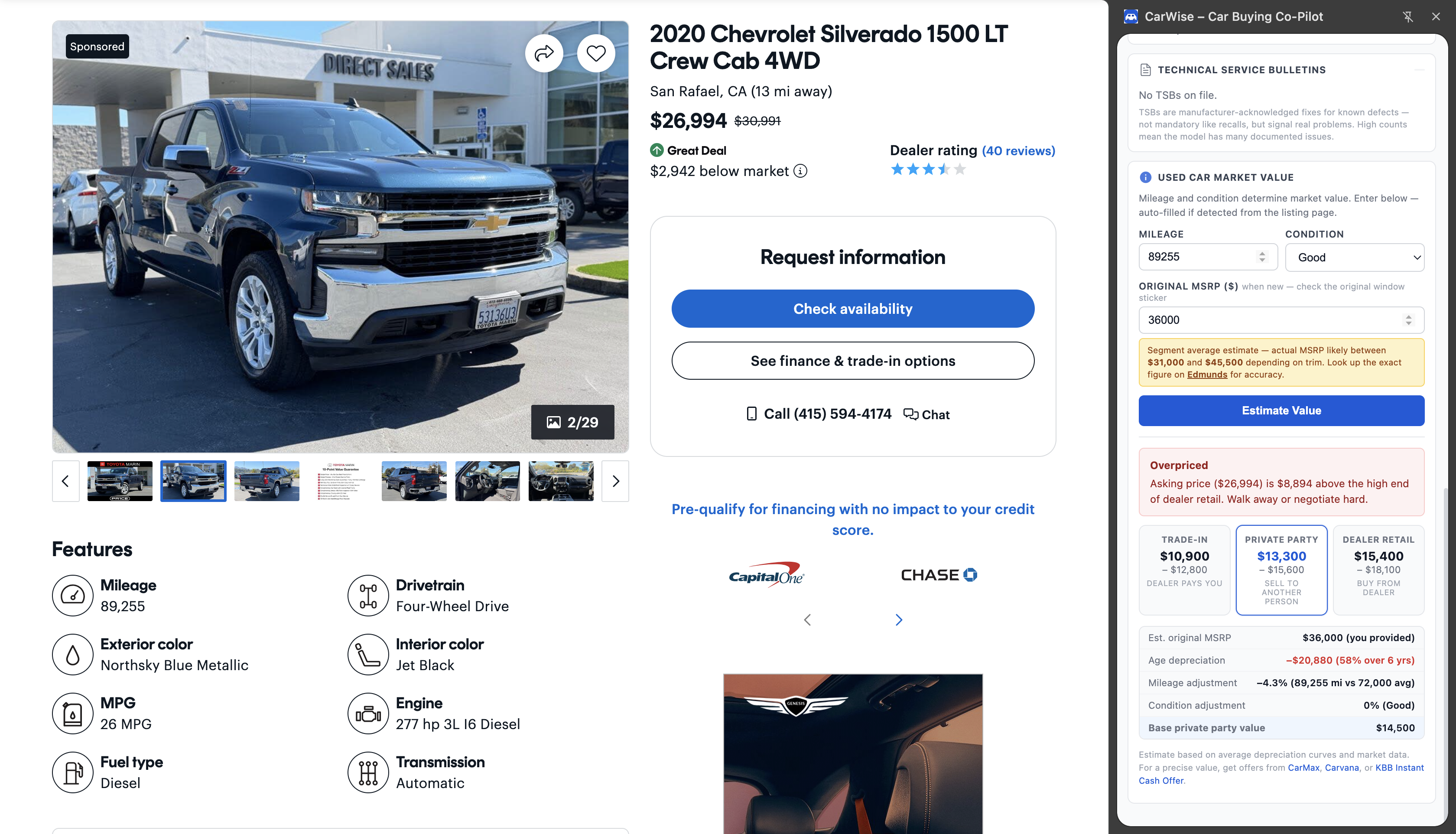
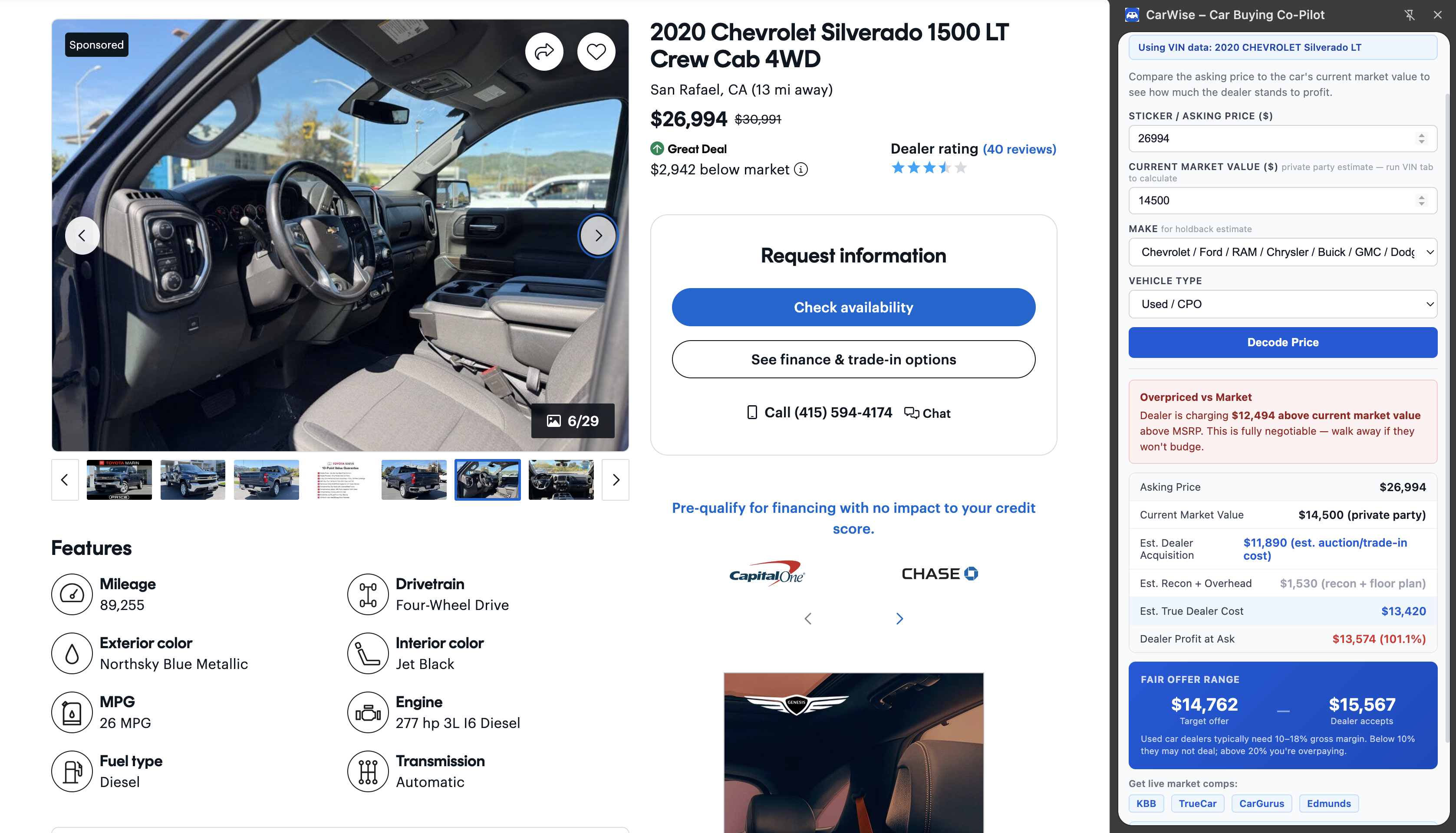
CarWise calculates a market value range using three data points: the vehicle's make and model depreciation curve, mileage adjustment, and current market conditions. Depreciation curves are make-specific — a Toyota Camry depreciates at a different rate than a Ford F-150 or a luxury vehicle from the same model year. CarWise applies these curves to derive a baseline fair market value from the vehicle's age and original MSRP estimate.
Mileage adjustment applies above or below the annual average of 12,000–15,000 miles per year. A vehicle with significantly fewer miles than average commands a premium; high-mileage vehicles are discounted. The result is presented as three values: private party (seller to buyer directly), trade-in (what a dealer would offer), and dealer retail (what a dealership would ask). The spread between these three is where negotiation happens.
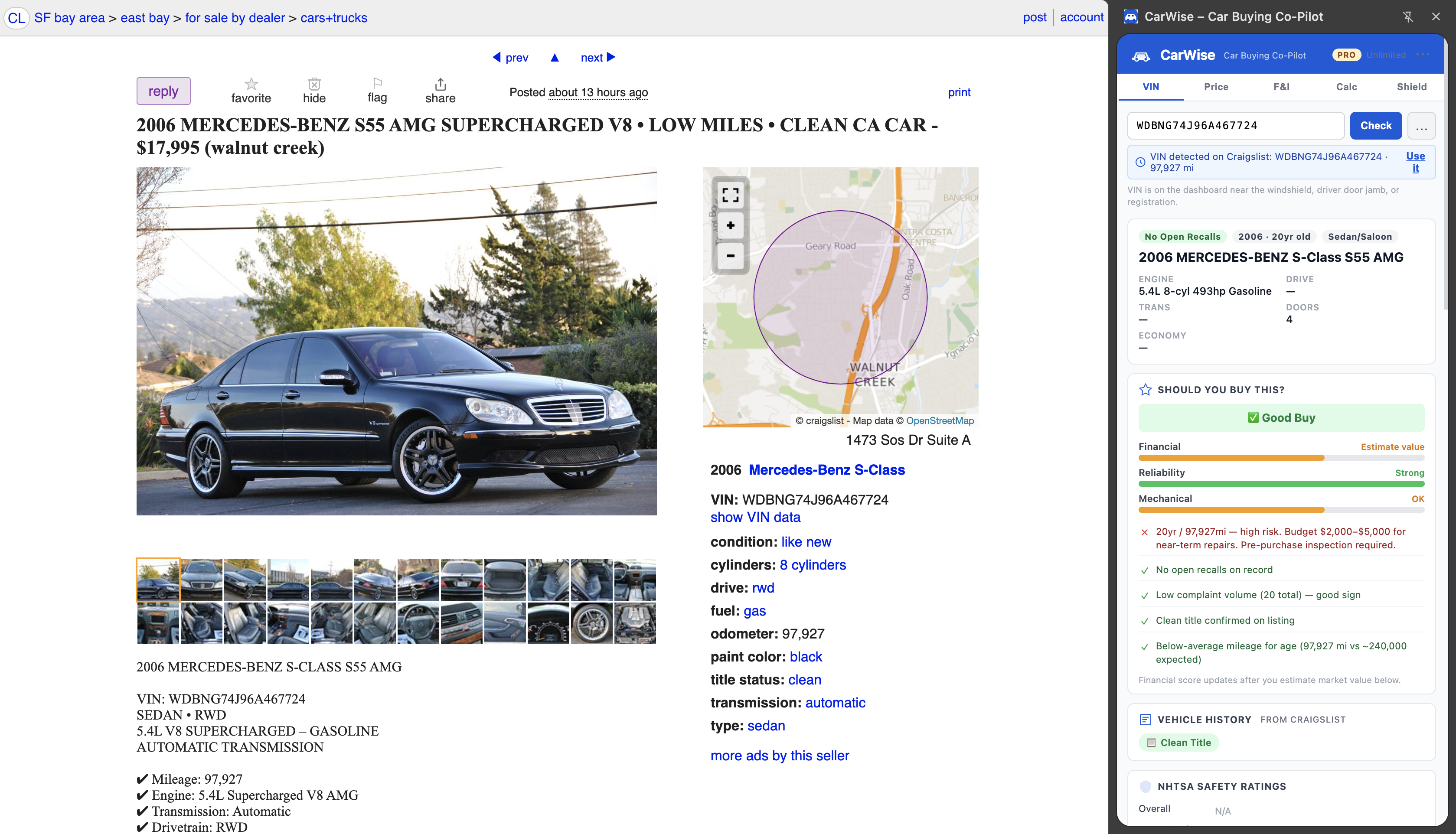
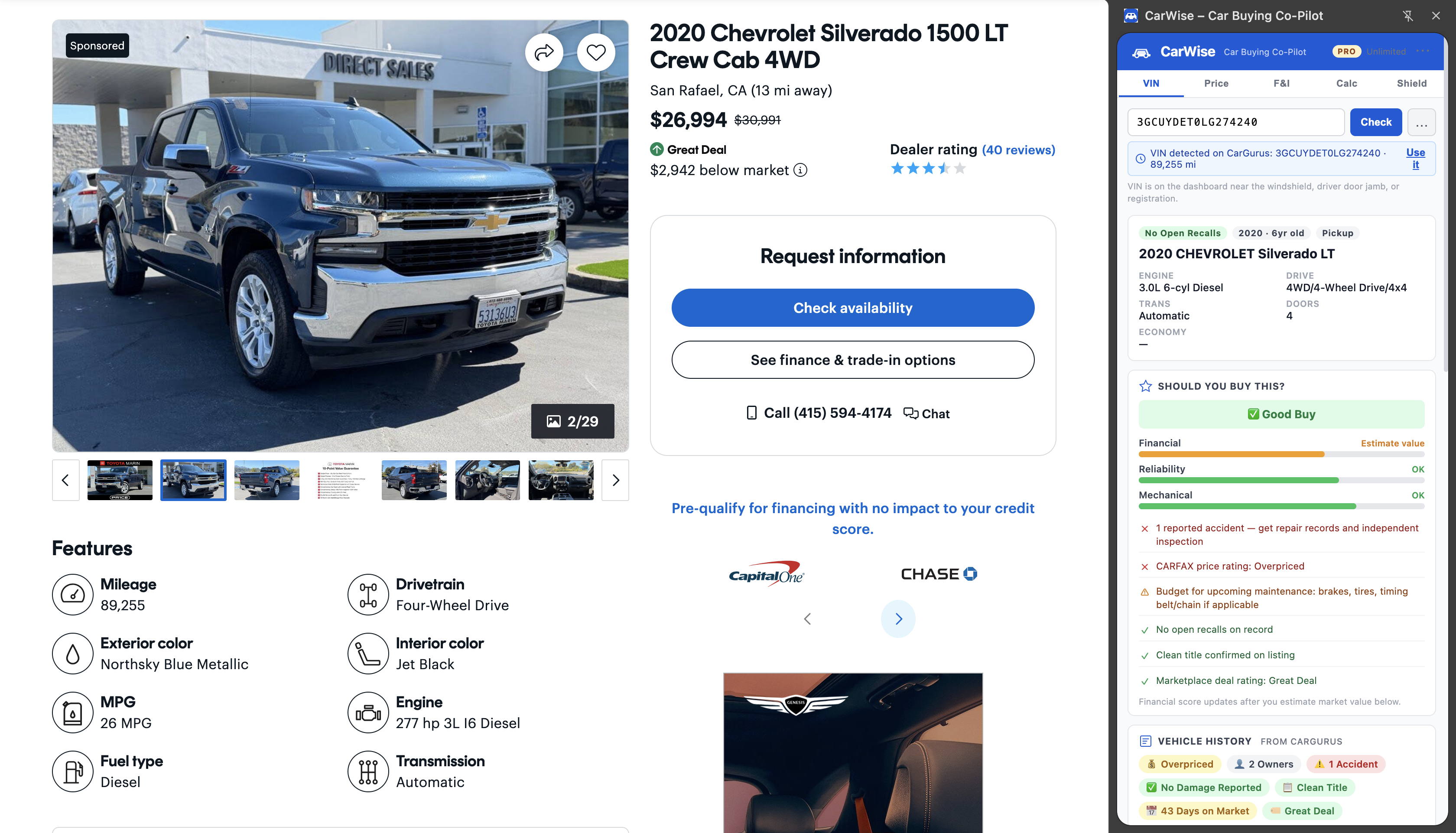
CarWise is a free Chrome extension that decodes any VIN and shows NHTSA safety ratings, open recalls, EPA fuel economy, and a market value estimate — directly inside CarMax, Carvana, AutoTrader, CarGurus, Craigslist, and Facebook Marketplace listings. Free plan includes 5 full scans per month with no credit card required.
What does CarWise show that Carfax and AutoCheck don't include?
Carfax and AutoCheck focus on vehicle history — accident records, title events, and service history reported by dealers and insurers. They tell you what happened to a car in the past. CarWise focuses on what you need to know right now, at the point of purchase: current NHTSA safety ratings, open recalls that haven't been repaired yet, real market value, and EPA fuel economy.
Open recall status is particularly important: a car can have a clean Carfax but still have an unrepaired safety recall. NHTSA data is free and public, but checking it requires leaving the listing page and searching a separate website. CarWise surfaces it inline — you see the recall status, the affected component, and whether the remedy is available without leaving the page you're already on.
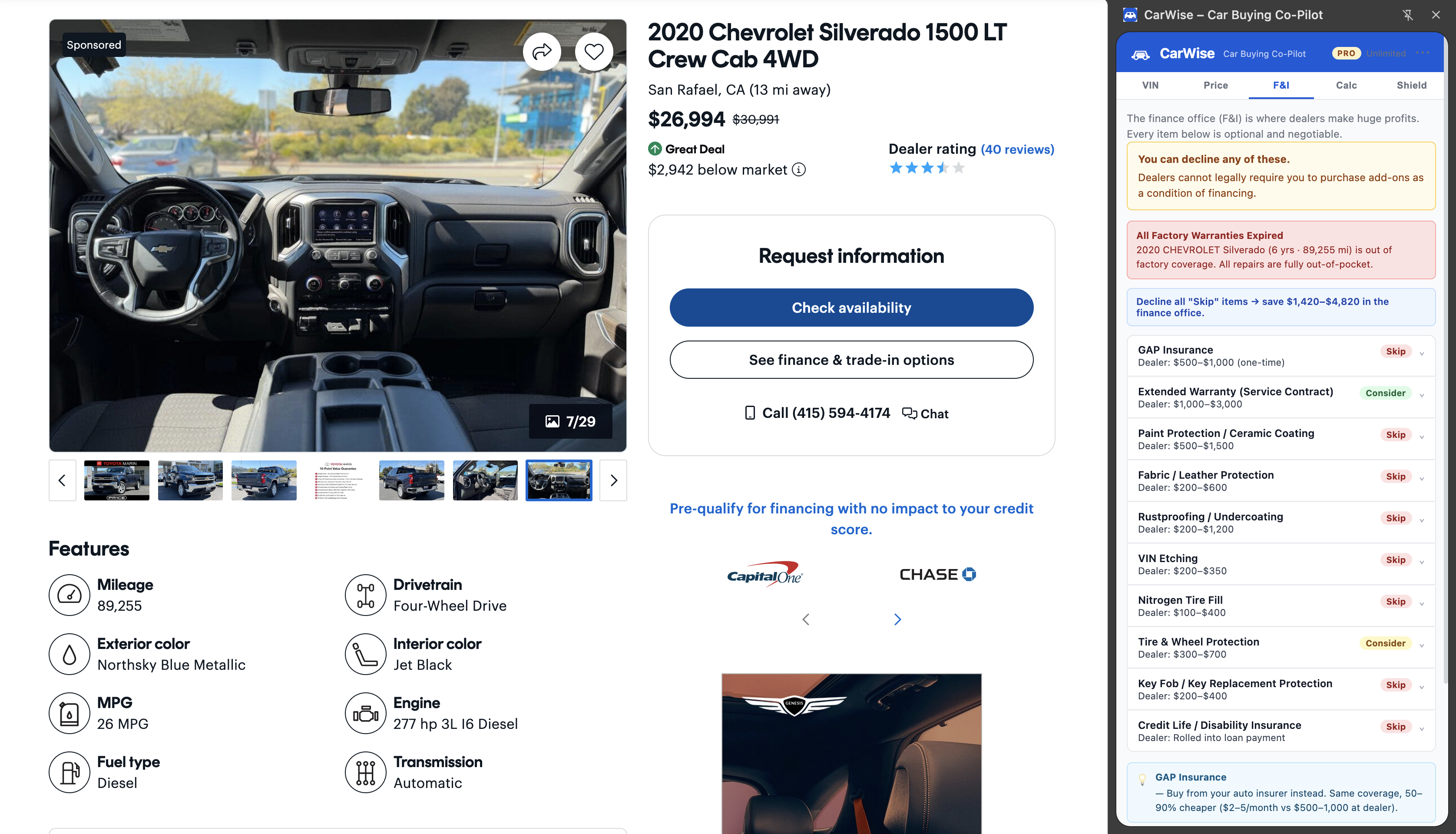
CarWise also includes a Finance & Insurance (F&I) guide: a breakdown of which dealership add-ons (extended warranties, GAP insurance, paint protection) are worth considering and which are high-margin products to decline. This type of context isn't available in any vehicle history report.
FAQ
Common questions
Is CarWise free?
Yes. The free plan includes 5 full VIN scans per month — no credit card required. Each scan includes VIN decode, NHTSA safety ratings, open recall check, real market value estimate, and EPA fuel economy. Upgrade to Pro for unlimited scans.
What car listing sites does CarWise work on?
CarWise activates automatically on CarMax, Carvana, AutoTrader, Cars.com, CarGurus, Kelley Blue Book, Edmunds, TrueCar, CarFax, Craigslist, and Facebook Marketplace. You can also manually enter any 17-character VIN to run a full decode on any vehicle.
Does CarWise check for open recalls?
Yes. CarWise queries NHTSA's official recall database and returns all open safety recalls associated with the VIN, including the affected component and whether the remedy is currently available at dealers.
How accurate is the market value estimate?
The market value estimate uses manufacturer-specific depreciation curves adjusted for vehicle age and mileage to produce private party, trade-in, and dealer retail ranges. It's a solid data-anchored baseline for negotiating — not a paid vehicle history report, but close enough to spot a bad deal immediately.
What is the F&I protection guide?
F&I (Finance & Insurance) is the dealership finance office, where buyers are often pressured into add-ons like extended warranties, GAP insurance, and paint protection. CarWise explains each product — what it covers, what it costs, and whether it's worth buying — so you can save $1,000–$3,000 at signing.
Does CarWise track my browsing or sell my data?
No. CarWise uses only official government APIs (NHTSA, EPA) and does not collect, store, or sell your browsing data. VIN lookups are not linked to your identity unless you create an account.